

A fairer heart-attack test for women – but not the whole answer
SEX-SPECIFIC TROPONIN TESTING
New international guidance reinforces the use of sex-specific troponin thresholds when clinicians assess possible myocardial infarction. This is an important step towards more accurate diagnosis in women—but a blood test never tells the whole story.
Arriving from Instagram?
This article expands on the seven-slide Prescribed Notes carousel, “Why heart testing is changing for women.” It explains the context, the limits of troponin testing and the sources behind the key messages.
**If you think you or someone else may be having a heart attack, call 999 in the UK.**
Urgent symptoms need urgent help. New, severe, persistent, worsening or exertional chest discomfort—or upper-body or upper-abdominal discomfort—particularly with breathlessness, sweating, nausea, faintness, collapse or marked unwellness, needs urgent assessment.
This article is general education and cannot assess individual symptoms.
The news behind the headline
Recent international guidance continues to support the use of sex-specific thresholds for high-sensitivity cardiac troponin testing when clinicians assess possible myocardial infarction.
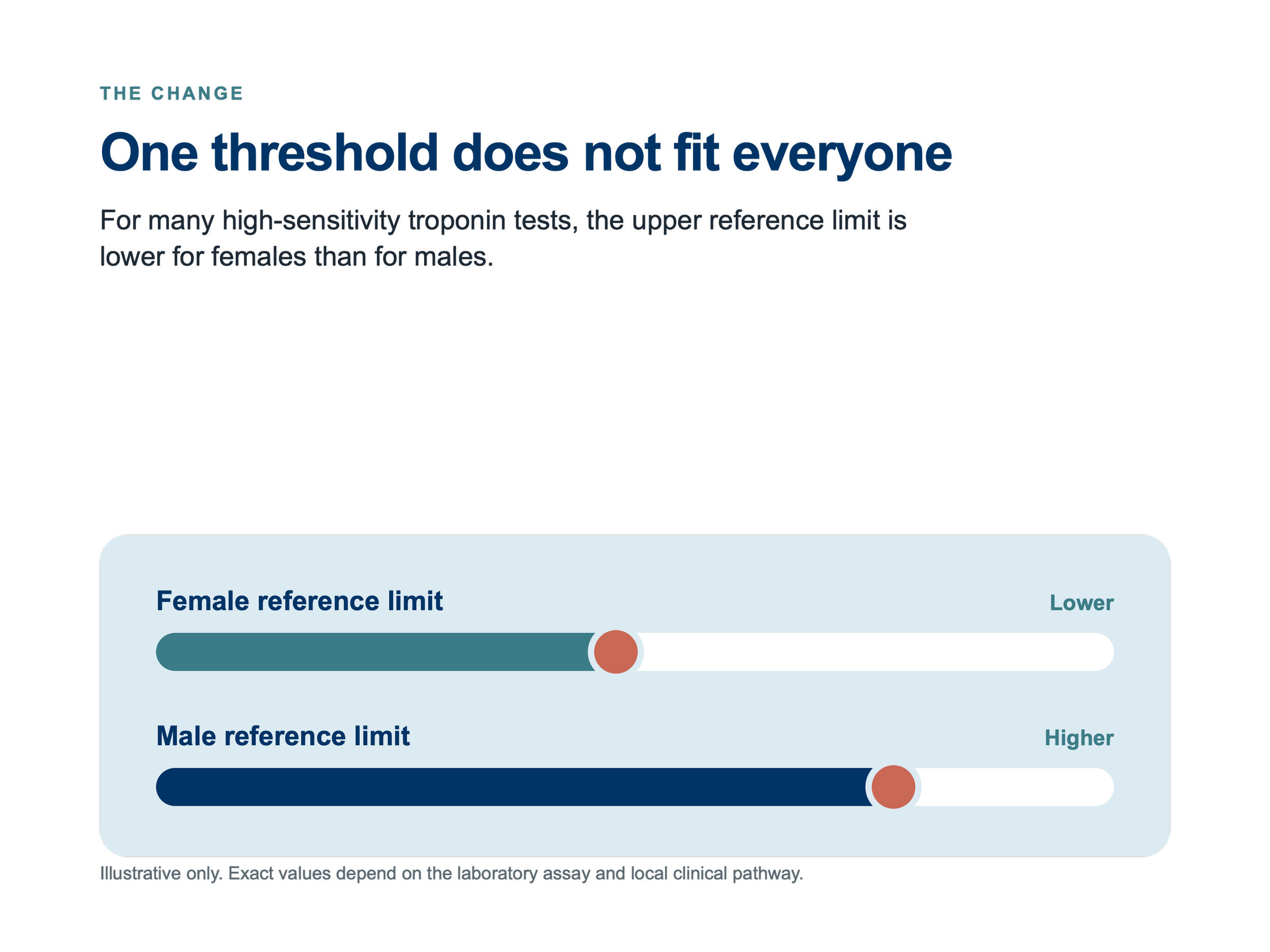
That matters because the blood-test reference limit used to identify myocardial injury is generally lower in females than in males. If a single, higher threshold is used for everyone, clinically important myocardial injury may be under-recognised in women.
But the story needs more care than a headline can provide.
A lower female troponin threshold does not mean women’s heart attacks are “smaller”. It does not mean that a single raised blood result confirms a heart attack. And it does not mean that chest pressure or chest discomfort is unimportant in women.
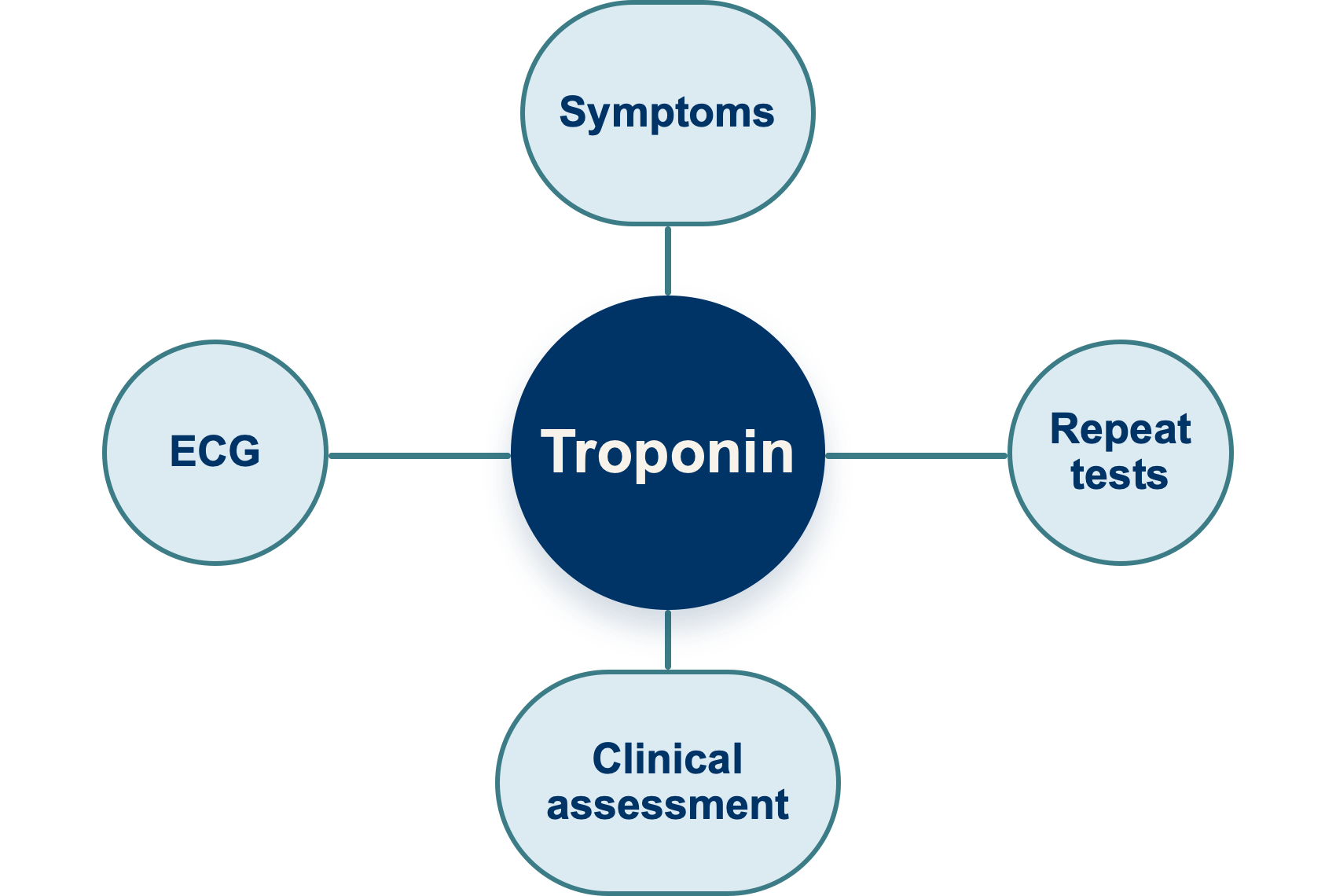
It means that diagnostic accuracy depends on using the appropriate reference range, then interpreting the result alongside symptoms, ECG findings, changes in troponin over time, imaging where needed, and the wider clinical picture..
What troponin actually tells us
Troponin is a protein released into the bloodstream when heart-muscle cells are injured. Modern high-sensitivity tests can detect very small amounts.
A result above the relevant sex-specific upper reference limit identifies myocardial injury. A diagnosis of acute myocardial infarction requires more: there must usually be evidence of a rise and/or fall in troponin, together with clinical evidence that the injury is due to acute myocardial ischaemia.
That evidence may include symptoms consistent with an acute coronary syndrome, new ECG changes, imaging evidence of new heart-muscle damage, or evidence of a coronary blockage or clot.
This distinction matters because troponin can rise for reasons other than a classic plaque-rupture heart attack. The result always needs careful clinical interpretation.
Why sex-specific thresholds matter
Reference ranges are not merely laboratory technicalities. They influence who is recognised, investigated and treated.
For high-sensitivity cardiac troponin assays, the 99th-percentile upper reference limit is generally lower in females than in males. A threshold that is not sex-specific can therefore miss some women whose troponin concentration is abnormal for them but remains below a higher uniform cut-off.
This is an issue of diagnostic precision and equity—not an argument for less rigorous medicine.
Exact troponin values are assay- and laboratory-specific. A number quoted in one hospital pathway may not apply to a different laboratory or test. That is why clinicians should use their local validated pathway rather than a universal figure taken from social media or a news headline.
The practical message is simple: the right blood-test reference range matters—but so does listening carefully to the person in front of you.
Diabetes adds another layer
Diabetes increases cardiovascular risk in women and men. It is also associated with poorer outcomes after myocardial infarction.
The explanation is unlikely to be one thing alone. It may include a greater burden of vascular disease, kidney disease and other comorbidities; delayed recognition or delayed presentation; differences in symptoms; investigation and treatment patterns; and wider social, economic and healthcare-access factors.
Menopause may form part of the biological context, but it would be too simplistic to explain the issue only through loss of oestrogen protection. Cardiovascular risk reflects the combined effects of diabetes, blood pressure, lipids, smoking, kidney function, age, diabetes duration, access to care and the wider determinants of health.
Symptoms: broaden the story, do not replace it
The familiar description of heart-attack discomfort—pressure, tightness, heaviness, squeezing or constriction in the centre of the chest—remains important for women and men.
The problem is not that this description is wrong. The problem is treating it as the only acceptable description.
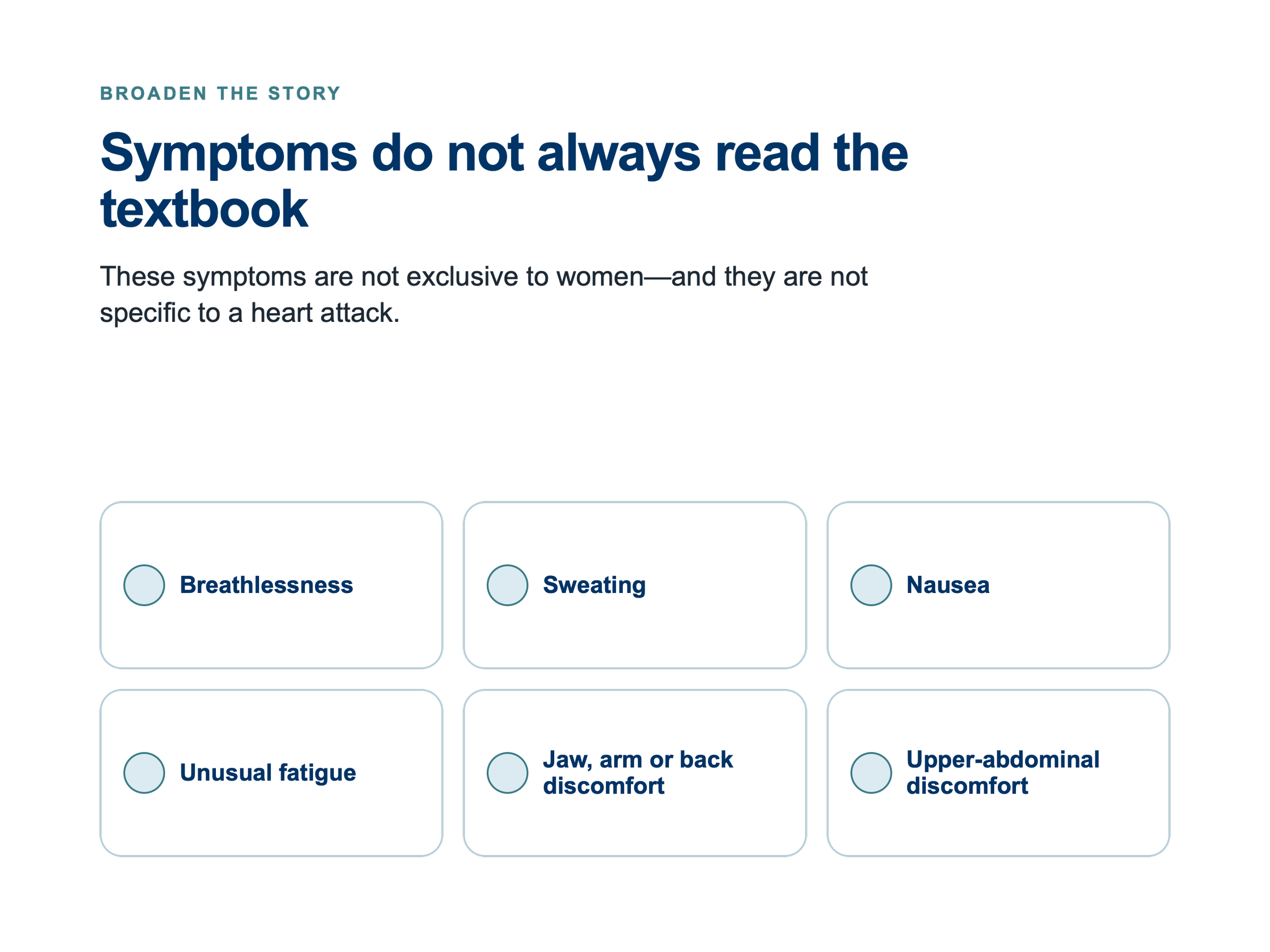
Acute coronary syndromes can also involve breathlessness, sweating or clamminess, nausea or vomiting, dizziness, collapse, unusual fatigue, discomfort spreading to an arm, shoulder, neck, jaw or back, and sometimes upper-abdominal discomfort.
Women and people living with diabetes may sometimes describe breathlessness, fatigue, nausea or upper-abdominal symptoms more prominently. These are not “female symptoms”, and they are not specific to a heart attack. But neither should they be casually dismissed as indigestion, stress, reflux, or a stomach bug when the wider pattern is concerning.
Why symptoms cannot locate an infarct
It is tempting to connect nausea or upper-abdominal discomfort directly with a particular location of heart-muscle damage, such as an inferior or posterior myocardial infarction.
Although gastrointestinal symptoms can occur during acute coronary syndromes, symptoms cannot reliably tell us where in the heart an infarct has occurred. That conclusion requires clinical assessment, ECG interpretation, blood tests and, where appropriate, imaging or coronary investigation.
For public communication, the safest message is straightforward: do not wait for symptoms to match a stereotype.
What this change means in practice?
Sex-specific troponin thresholds are an important step forward. But fairer blood-test thresholds are only one part of equitable diagnosis.
Better care also means:
Using sex-specific, assay-specific laboratory pathways where recommended
Not requiring a single textbook symptom story before taking symptoms seriously.
Recognising diabetes as a major cardiovascular-risk condition.
Interpreting troponin in clinical context rather than in isolation.
Ensuring timely investigation, treatment and secondary prevention.
The bottom line
A more accurate blood-test threshold may help reduce under-recognition of myocardial injury in women. But no blood test replaces listening carefully to symptoms, assessing cardiovascular risk, using ECGs and repeat tests appropriately, and acting quickly when a heart attack is possible.
Chest pressure still matters. So can breathlessness, sweating, nausea, unusual fatigue, jaw, arm, back or upper-abdominal discomfort—especially when symptoms are new, severe, persistent, worsening, exertional, or accompanied by marked unwellness.
If a heart attack may be happening, call 999 in the UK.
by Dr. Stephen Lawrence

Sources and references
European Society of Cardiology — Fourth Universal Definition of Myocardial Infarction
Thygesen K, Alpert JS, Jaffe AS, et al. Fourth Universal Definition of Myocardial Infarction (2018). European Heart Journal.
This supports the distinction between myocardial injury and myocardial infarction, including the need for a rise/fall in troponin plus clinical evidence of acute myocardial ischaemia.European Society of Cardiology — Acute Coronary Syndromes Guideline
2023 ESC Guidelines for the management of acute coronary syndromes.
This supports contemporary assessment of suspected acute coronary syndrome and use of validated pathways.NHS — Heart attack
https://www.nhs.uk/conditions/heart-attack/
For symptoms, urgent action and what to do if a heart attack is suspected.NHS — Chest pain
https://www.nhs.uk/symptoms/chest-pain/
For emergency guidance about sudden or persistent chest pain or discomfort.Diabetes UK — Diabetes and heart disease
https://www.diabetes.org.uk/about-diabetes/looking-after-diabetes/complications/cardiovascular-disease
For general information about diabetes and cardiovascular risk.